Temporal executes your workflows. LangGraph builds your agents.
Compare LangGraph and Temporal for AI agent workflows. See how LangGraph's agent-native orchestration differs from Temporal's durable execution approach.
June 6, 2026
Temporal is a durable execution engine built for generic workflows: financial transactions, job pipelines, background processing. That's its job.
LangGraph and LangSmith are built for a different job: AI agents that need memory, streaming, human oversight, AI observability, and a full development lifecycle in one place. Many teams run both, keeping Temporal for what it was designed for and using LangGraph for their agent work.
When agents reason through non-deterministic paths and call tools across multiple steps, your orchestration choice matters. We built LangGraph for exactly this kind of problem.
- Agent-Native Observability: token usage, cost, latency, and model parameters auto-captured per trace, thread, and subagent.
- Memory & Human-in-the-Loop Built In: short and long-term memory ship with LangGraph; HITL is a single
interrupt()call - Full Agent Lifecycle in One Platform: Studio, Prompt Hub, Playground, Annotation Queues, Deployments, monitoring, plus A2A/MCP/Agent Protocol support
Get a demo of LangSmith's agent engineering platform
What sets LangGraph apart from Temporal?
Temporal handles durable execution for distributed systems well. When you're building AI agents, you need more than a runtime durability layer.
Where Temporal's limits surface for AI agents
Temporal is strong infrastructure. These are scope boundaries that matter when your workload is agent reasoning, not transaction processing.
- Context engineering is yours to build: Temporal has no concept of prompts, context windows, or LLM state. Teams manually track message history, build summary chains, and wire up retrieval from scratch. Your codebases ends up with fragile custom layers that are hard to debug.
- HITL and streaming need custom infra: Human approval flows require custom signal handlers and state machines. Streaming requires a bespoke pub/sub layer on top. Temporal has no supported path for either.
- No LLM observability or evals: Temporal's workflow history shows step completion — nothing about token cost, prompt quality, or which inputs produce bad outputs. There's no eval framework and no annotation queue in Temporal.
- Reddit threads consistently frame Temporal as a durability layer, not a full agent framework. That scope means agent-level tracing and evaluation tooling aren't part of the offering.
- Structurally limited to 2 MB payloads due to gRPC architecture: Document processing, multimedia, and large context windows force teams using Temportal to store payloads externally, return an ID from one activity, then re-fetch in the next. LangGraph Cloud routinely handles payloads in the hundreds of megabytes.
Why choose LangGraph over Temporal?
Temporal is a general-purpose runtime that can run AI workloads. LangGraph is an orchestration framework designed for how AI agents actually work.
Your team gets graph-based state management and cognitive architecture primitives, plus an integrated platform for tracing and evaluating agents with built-in deployment. You don't need to stitch together separate tools for each stage of the application's lifecycle.
Graph-based agent orchestration
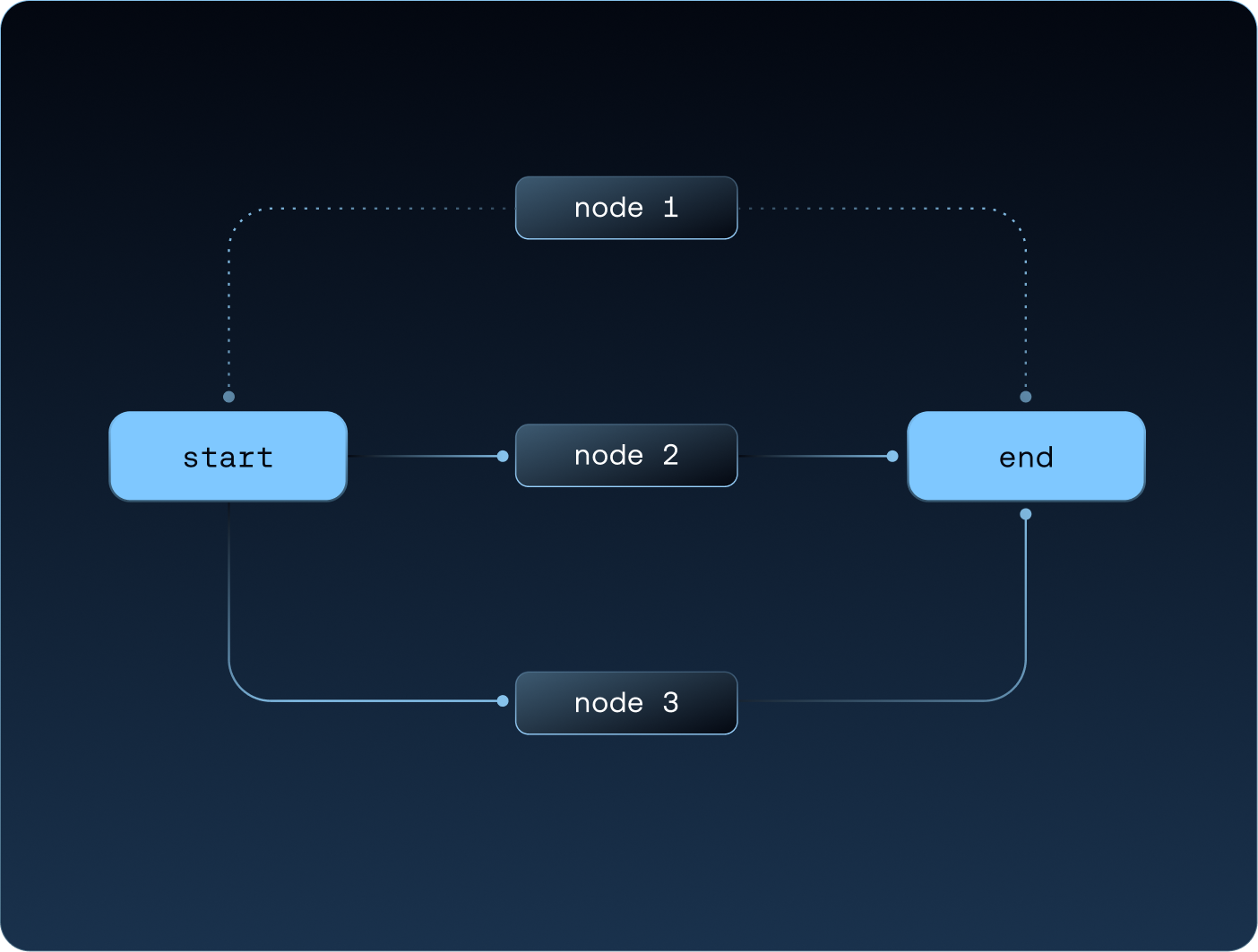
LangGraph models agents as explicit state graphs with nodes and edges. Your orchestration logic matches how agents actually reason. Temporal requires deterministic workflow code, so non-deterministic LLM behavior needs workarounds like Worker Versioning or patching to handle code changes safely.
With LangGraph, you define multi-agent patterns like supervisor and handoff architectures directly in the graph, and we handle state persistence across every step.
See every reasoning step: prompts, tool calls, and outputs
LangSmith captures prompts, intermediate reasoning, tool calls, and outputs across the full agent trajectory, so you see exactly what the model did and why. Every step is visible.
Traditional workflow monitoring shows execution state and workflow history, but it doesn't debug non-deterministic systems where the same input produces different outputs. We built LangSmith's tracing to render the complete execution tree, giving your team visibility into what would otherwise be a black box.
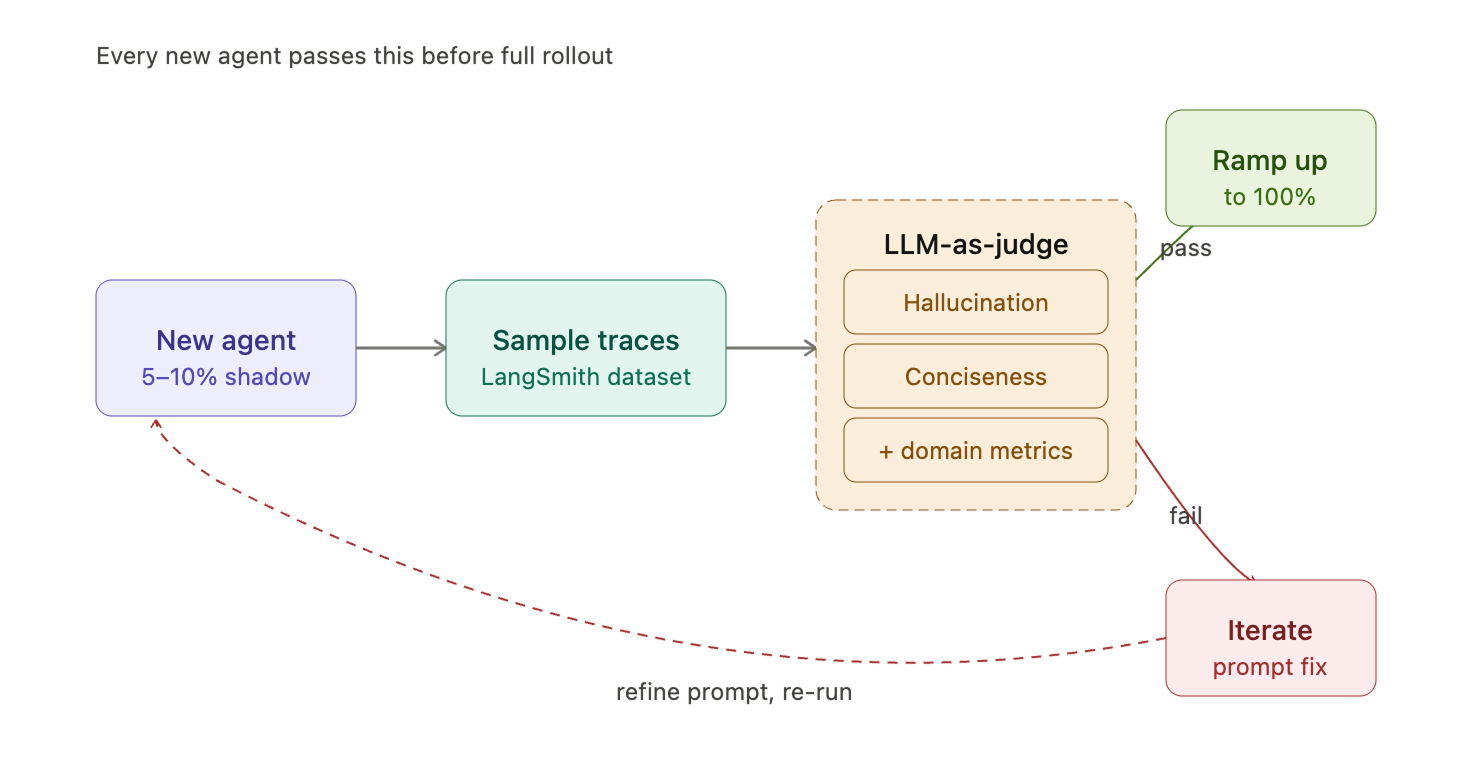
By leveraging LangGraph to orchestrate a sophisticated multi-agent system, Lyft has transformed its customer support operations, managing millions of interactions for riders and drivers. Our "self-serve" platform integrates LangGraph’s subgraph architecture with LangSmith’s robust tracing and monitoring tools, empowering non-technical domain experts to develop and refine AI agents independently. This shift has accelerated agent development from roughly six months to just a few weeks, all while upholding high standards through an automated LLM-as-a-judge evaluation system. (Lyft Case Study)
From evaluation to deployment: one platform
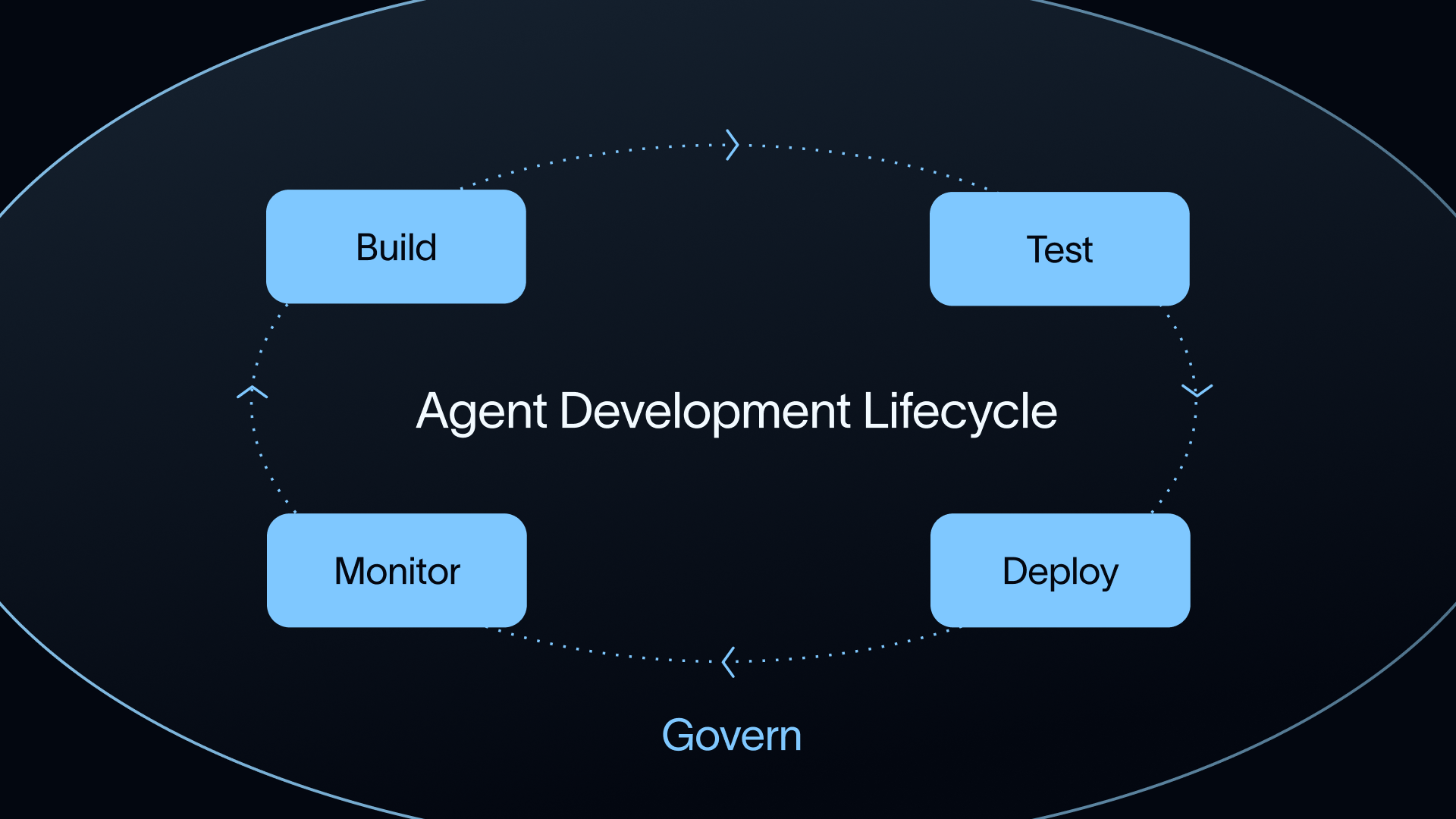
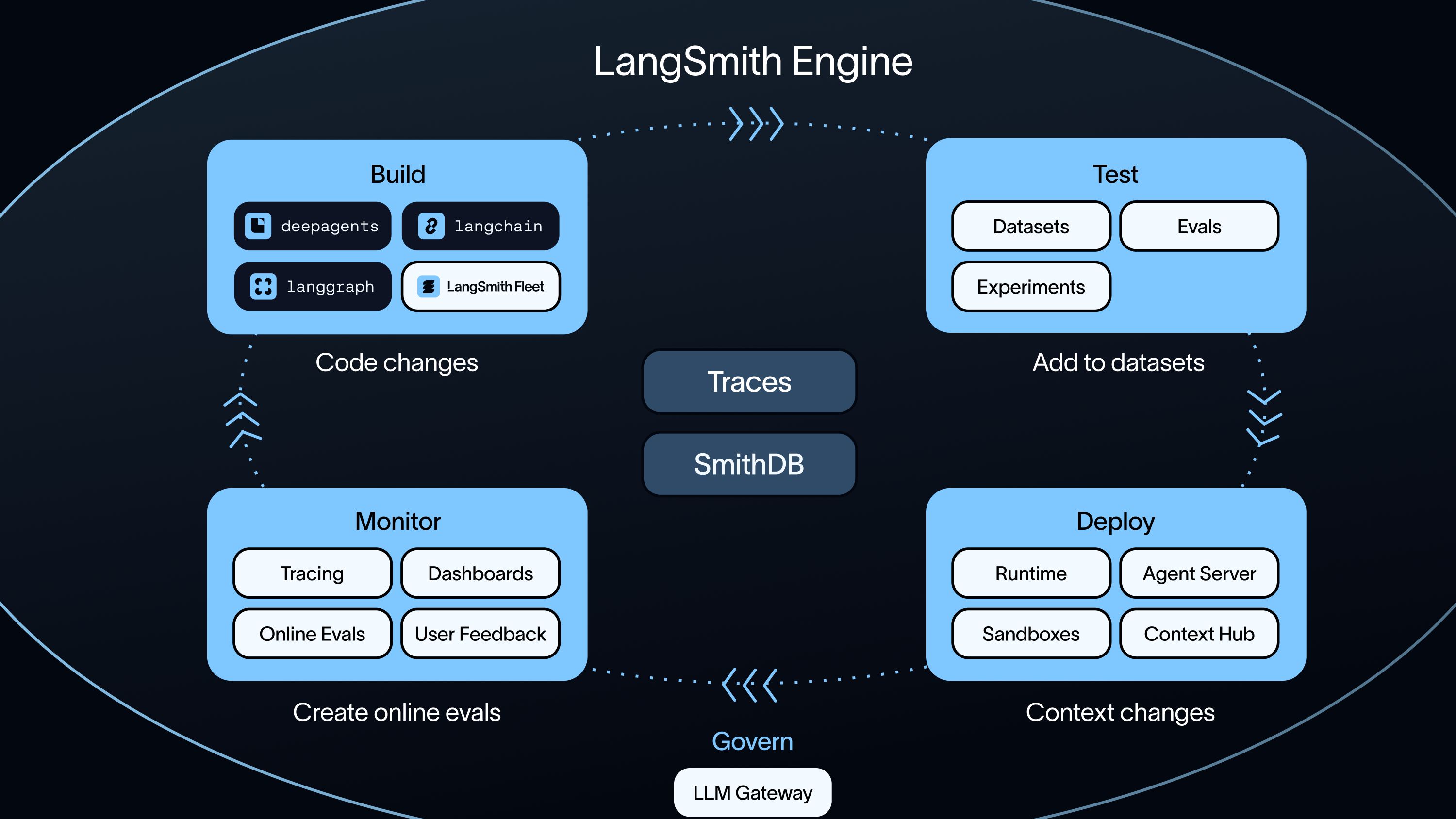
LangSmith closes the gap between authoring and running. Instead of stitching together separate tools for each stage, you get a single platform organized around a continuous loop.
Build. Studio, Playground, and Prompt Hub give your team a fast iteration environment. Author graph logic, test prompts against eval datasets, and refine agent behavior before anything hits production.
Observe. Once agents are running, LangSmith automatically captures LLM traces, token usage, cost, and latency per span, thread, and subagent. No manual instrumentation required. Insights surfaces patterns across production traces automatically.
Evaluate. Online evaluators score live traffic in real time. Annotation Queues let domain experts review and correct outputs. LLM-as-a-judge runs scoring at scale.
Deploy. Agent Fleet manages long-running, stateful agents in production. A2A, MCP, and Agent Protocol connect your agents to external systems. A no-code builder and agent registry make it possible for non-engineers to ship and discover agents across the organization.
Each stage feeds the next. Production traces from Observe generate eval datasets for Evaluate. Eval results inform prompt and graph changes in Build. Improved agents roll out through Deploy.
Every cycle makes your agents more reliable, more cost-efficient, and easier to debug. LangSmith Engine runs through this cycle of improvement automatically. It prioritizes your agent issues, suggests a PR for a fix, and suggests evals so the regression doesn’t happen again.
Bring your whole team into the loop
Agent engineering is a team sport. LangSmith Studio gives engineers a visual debugging environment. Annotation Queues let domain experts review and correct agent outputs directly: lawyers, clinicians, analysts, and product managers.
Temporal's tooling is developer-centric. It requires understanding of activities, workflows, replay, and determinism primitives that aren't a strong fit for non-engineering stakeholders. It’s UI also doesn’t surface agent-native concepts, it’s not built to report on turns, memory, tool calls, or LLM costs.
How Klarna orchestrates AI agents at production scale
Klarna's AI assistant has handled 2.5 million conversations to date across its 85 million active users. The team built a controllable agent architecture using LangGraph for routing and task handling, with step-by-step tracing and test-driven iteration through LangSmith.
Klarna's scale is exactly where orchestration choices become visible. Their agents handle production traffic that demands tracing and evaluation general workflow runtimes don't provide.
Switching from Temporal to LangGraph
Teams currently using Temporal for AI agent workloads can expect a structured transition.
- What transfers: Your agent logic and business rules carry over. LangGraph uses Python, so existing Python-based activities translate directly into graph nodes.
- What changes: You move from deterministic workflow constraints to graph-based orchestration. Agent state management becomes native rather than requiring workarounds for non-determinism.
- Observability upgrade: LangSmith replaces separate monitoring tools with integrated AI-specific tracing and evaluation. Your team sees prompts, reasoning, and model outputs at every step.
- Timeline: In our experience helping teams make this transition, a working LangGraph prototype typically comes together within a few days. Production migration timelines vary depending on agent complexity and how deeply Temporal is embedded in your current architecture.
- Support: We've helped teams make this move before. The patterns that trip people up are usually around state management and observability setup. Both have documented migration paths.
Get a demo of LangSmith's agent engineering platform
When to use LangGraph vs. Temporal
Where LangGraph pulls ahead
Multi-agent systems with complex reasoning
- Your agents use supervisor and handoff patterns that require graph-based control flow.
- Non-deterministic model outputs need native support, not determinism workarounds.
- LangGraph's subgraph composition and Send API enable parallel execution across agent branches
Production debugging for non-deterministic systems
- A single user request triggers dozens of tool calls and reasoning steps.
- Your team needs to know what the model said at step 14. Knowing step 14 completed is not enough.
- LangSmith traces render the full execution tree across every agent trajectory.
Teams that include non-engineers
- Product managers need visibility into agent behavior without reading code.
- Domain experts use Annotation Queues to review and correct outputs.
- LangSmith Studio provides visual debugging that bridges engineering and domain expertise.
Start building AI agents with purpose-built orchestration
Build AI agents with orchestration designed for how they actually work. LangSmith works with any framework, so you're never locked in.
Get a demo of LangSmith's agent engineering platform
Frequently asked questions
Can LangGraph and Temporal work together?
They can, but the integration involves tradeoffs.
- Wrapping an entire LangGraph run inside a single Temporal activity loses fine-grained replayability and visibility.
- Maximum observability requires modeling every tool call as a separate Temporal activity, which adds significant complexity.
How long does it take to switch from Temporal to LangGraph?
Teams can build a working LangGraph prototype within days. Full production migration varies based on agent complexity and how deeply Temporal is embedded in your current architecture.
What does LangGraph cost compared to Temporal?
LangSmith plans start at $0/month for the Developer plan, with usage-based pricing as you scale. Temporal Cloud starts at $100/month for Essentials and $500/month for Business.
Will I lose observability data during migration?
LangSmith begins capturing traces as soon as you instrument your agents. Historical Temporal workflow data stays in your Temporal instance, so there's no data loss during transition.
Does LangGraph support long-running agents?
Yes, we built LangSmith Deployment for long-running, stateful agent workloads. Your agents can run for hours or days with pause and resume capabilities.
Is LangGraph locked into specific LLM providers?
No, LangGraph is model-agnostic by design, supporting OpenAI, Anthropic, Google, and others. Swap models by changing one line of configuration code.
Does LangGraph support Java, Go, .NET, Ruby, or PHP?
Agent authoring in LangGraph targets Python and TypeScript. For polyglot teams, the LangSmith Java SDK is in active development with Spotify as design partner and is published to Maven Central; LangGraph's data plane (langgraph-core) is being rebuilt in Go for concurrency, CPU/memory efficiency, and parallel node execution. LangSmith accepts OpenTelemetry traces from any language, so Java, Go, Ruby, and .NET teams can instrument AI services and have traces flow into LangSmith today.
How does LangGraph handle agent memory?
Short-term memory (within a run) and long-term memory (across sessions) are built in. Stateful agents persist context across interactions without custom infrastructure. Temporal has no memory primitives, so teams have to build and maintain their own memory layer.
Can LangGraph handle large documents, images, and context windows?
Yes. LangSmith Deployment routinely handles payloads in the hundreds of megabytes. Document processing, multimedia, and large context windows all work natively. Temporal has a structural 2 MB payload limit from its gRPC architecture; any larger payload must be stored externally, with an ID returned from one activity, then re-fetched in the next. This is a fundamental architectural constraint, not a config option.